Guidance and Counseling
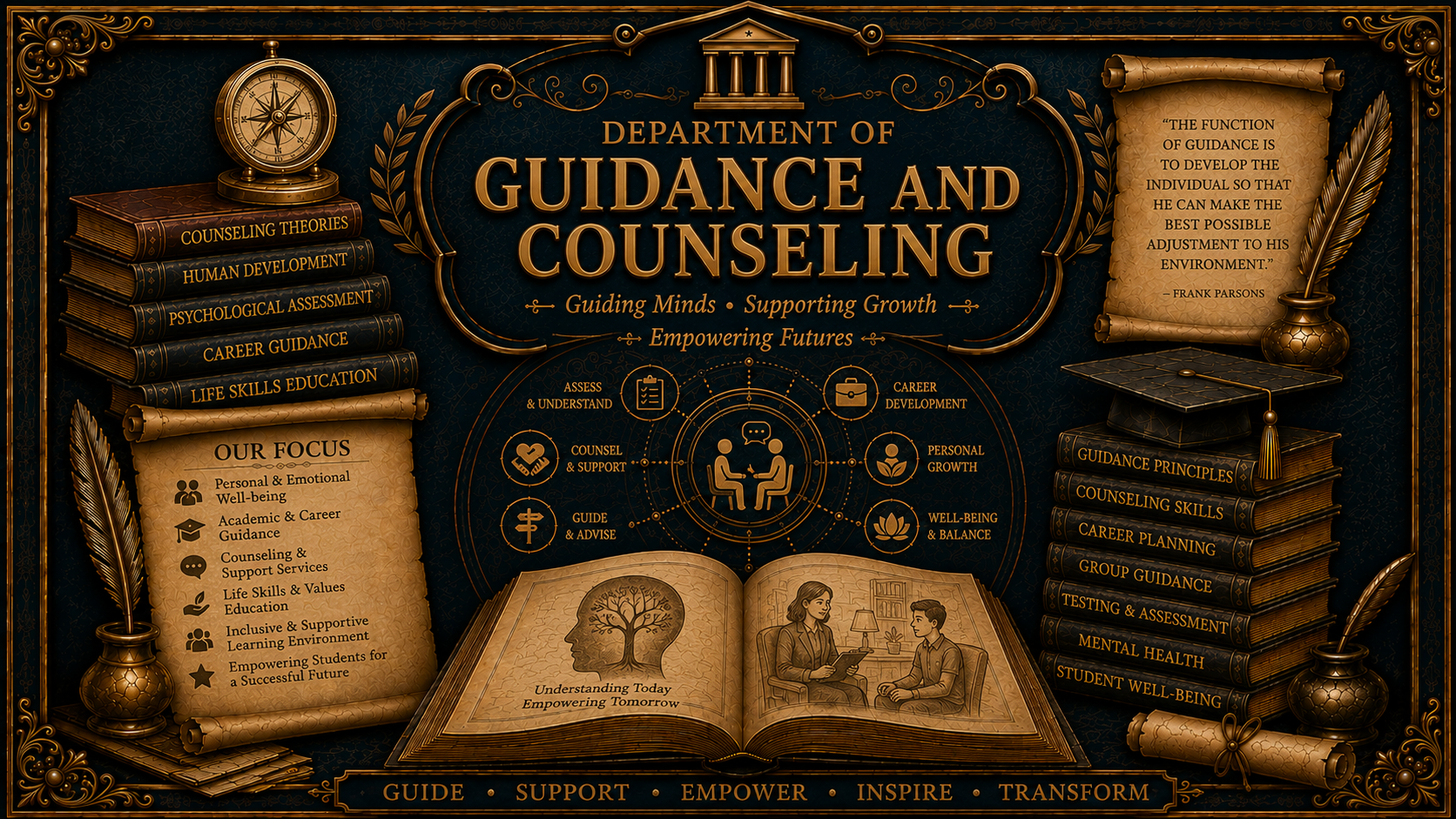
DEPARTMENT OF GUIDANCE AND COUNSELING
Supporting Learners Through Guidance and Counseling
The Department of Guidance and Counseling equips students with professional counselling skills to address academic, personal, emotional, and career-related challenges faced by learners. The department develops the knowledge, attitudes, and practical competencies required to provide effective learner support.
Students gain an understanding of guidance principles, counselling techniques, career development, behaviour modification, emotional intelligence, life skills, and special educational needs. The department promotes supportive approaches that help learners make informed decisions and achieve personal, academic, and professional growth.
Learner Support and Well-being
Developing educators with effective guidance and counselling skills to support learners' academic, personal, emotional, social, and career development.
Exploring Guidance and Counseling Practices
The Department of Guidance and Counseling equips students with professional counselling skills to address the diverse academic, personal, emotional, social, and career-related needs of learners. It prepares future educators to understand learner concerns and provide appropriate guidance and support.
Through theoretical learning and practical exposure, students develop competencies in counselling techniques, career guidance, behaviour modification, emotional intelligence, life skills education, and support for learners with special educational needs. Counselling sessions, case studies, and psychological assessments provide opportunities to apply knowledge in practical educational contexts.
Holistic Learner Development
Encouraging future educators to provide empathetic, responsible, and effective guidance that supports learners' overall well-being and development.
Key Focus Areas
The department focuses on developing professional guidance and counselling competencies to support learners' academic, personal, emotional, social, career, and developmental needs.
Guidance Principles
Understand the principles, purposes, processes, and approaches of educational guidance for supporting learners in their academic and personal development.
Career Guidance
Develop skills to assist learners in exploring career interests, educational pathways, employment opportunities, and informed career decisions.
Counselling Techniques
Develop practical knowledge of counselling approaches, communication skills, listening techniques, and supportive strategies for addressing learner concerns.
Student Well-being
Promote learner well-being by understanding emotional, social, academic, and personal factors that influence positive educational experiences.
Behaviour Modification
Understand learner behaviour and explore appropriate strategies for encouraging positive behavioural patterns and supportive classroom interactions.
Emotional Intelligence
Develop awareness of emotional intelligence and its role in self-awareness, self-management, empathy, interpersonal relationships, and learner development.
Life Skills Education
Promote essential life skills such as communication, decision-making, problem-solving, interpersonal skills, resilience, and responsible personal development.
Special Educational Needs
Develop an understanding of diverse learning needs and appropriate guidance and support strategies for learners requiring additional educational assistance.
Learning Through Guidance and Counseling
The department provides practical exposure through counselling sessions, case studies, psychological assessments, role plays, guidance activities, career awareness programmes, group discussions, and learner support exercises. These activities help students develop effective communication, active listening, empathy, observation, problem-solving, and counselling skills. Practical experiences enable future educators to respond appropriately to the diverse needs and challenges faced by learners.